
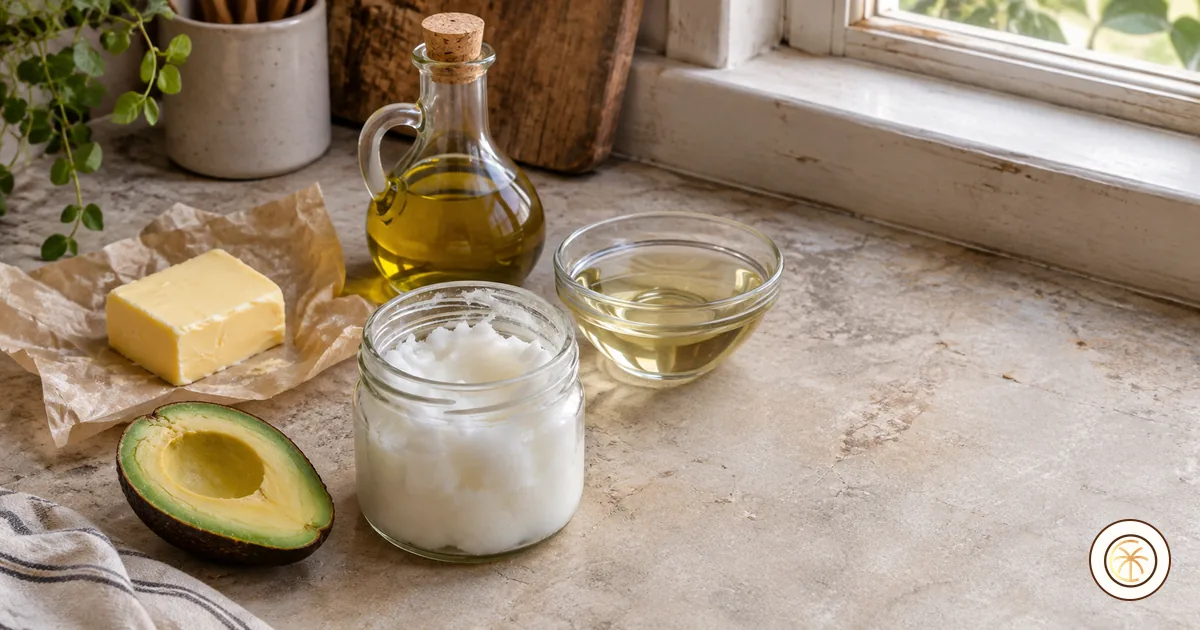
The best coconut oil substitute depends on what the oil is doing in the recipe. A neutral liquid oil can replace coconut oil in a stir-fry, but it may not provide the solid structure that a cookie or pie crust needs. Butter can mimic that structure, yet it is neither vegan nor dairy-free. The right choice starts with the cooking method, desired flavor, and whether the original recipe uses solid or melted coconut oil.
For most everyday cooking, use the same amount of avocado, canola, sunflower, or light olive oil. For baking, choose butter, vegan butter, or shortening when the recipe relies on a firm fat. Then consider how the replacement changes flavor, moisture, browning, and dietary suitability.
Quick Coconut Oil Substitute Chart
| Substitute | Starting ratio | Best for | Main change to expect |
|---|---|---|---|
| Avocado oil | 1:1 | High-heat cooking, roasting, dressings | Mild flavor and liquid texture |
| Canola or sunflower oil | 1:1 | Frying, cakes, muffins, everyday cooking | Neutral flavor, stays liquid |
| Light olive oil | 1:1 | Sautéing, marinades, savory baking | Slight olive flavor depending on grade |
| Butter | 1:1 by volume | Cookies, cakes, pastry, pan cooking | Dairy flavor and water content |
| Vegan butter | 1:1 | Dairy-free baking and spreads | Results vary by brand and water content |
| Vegetable shortening | 1:1 | Pie crust, frosting, crisp cookies | Neutral taste and firmer structure |
| Ghee | 1:1 | Sautéing, roasting, rich baked goods | Buttery flavor; not dairy-free |
| Applesauce | Replace only part of the oil | Muffins, quick breads, snack cakes | Softer, wetter, less rich result |
| Greek yogurt | Replace only part of the oil | Cakes, muffins, quick breads | Added moisture and tang; contains dairy |
Ratios are starting points rather than guarantees. Brand formulation, recipe size, oven temperature, and whether ingredients are measured by weight can all change the result.
Best Substitute for Frying and High-Heat Cooking
Refined avocado oil, canola oil, sunflower oil, and other neutral refined oils are practical choices when a recipe uses coconut oil mainly to transfer heat. The Food Network guide to coconut oil alternatives highlights canola oil as a neutral option suitable for methods such as frying and grilling.
Smoke point figures are not universal. Refinement, age, free fatty acid level, and handling affect how an oil behaves. Instead of choosing by one published number, use an oil labeled for the intended cooking method and stop if it smokes or develops an acrid odor.
For shallow frying, replace coconut oil 1:1 with a neutral oil. For deep frying, make sure there is enough oil to maintain a stable temperature and avoid overcrowding the pan. Olive oil works well for many sautéed dishes, but a strongly flavored extra-virgin oil will be noticeable in delicate foods.
If you are comparing coconut oil formats rather than avoiding them entirely, Cocopany's VCO versus RBD coconut oil guide explains why refined coconut oil is neutral while virgin coconut oil retains a coconut aroma.
Best Coconut Oil Substitute for Baking
Baking requires a closer match because fat controls tenderness, aeration, spread, and moisture. First check whether the recipe asks for solid coconut oil, softened coconut oil, or melted coconut oil.
When the coconut oil is melted
For muffins, quick breads, brownies, and many simple cakes, a neutral liquid oil is usually the easiest 1:1 replacement. Measure it in the same state and amount specified by the recipe. Canola, sunflower, grapeseed, and mild olive oil can all work.
Liquid oil may make a cake feel moist but can increase cookie spread because it never firms at room temperature. If the dough looks much softer than expected, chilling may help, but a tested recipe is safer than making several changes at once.
When the coconut oil is solid
Butter, vegan butter, or shortening is a closer functional match. Use a 1:1 starting ratio, then watch texture. Butter contains water and milk solids, while coconut oil is nearly all fat. That difference may create more steam, browning, and dairy flavor.
Use shortening when a neutral taste and firm texture matter, such as pie crust or frosting. Use vegan butter for dairy-free baking, but check the label because fat and water percentages vary. Coconut oil is naturally plant-based; Cocopany's guide to virgin coconut oil describes how it differs from refined coconut oil before either is used in food production.
Fruit purée and yogurt are partial substitutes
Unsweetened applesauce, mashed banana, pumpkin purée, or yogurt can replace part of the oil in forgiving recipes. They add water and, in some cases, sugar or protein. The result is usually softer, denser, and less rich.
Start by replacing one-quarter to one-half of the coconut oil rather than all of it. Fruit purée works best in muffins, snack cakes, and quick breads, not in pastry, crisp cookies, or recipes that depend on creaming fat with sugar.
Which Substitute Matches the Flavor?
Virgin coconut oil contributes a recognizable coconut aroma. RBD coconut oil is refined for a neutral sensory profile. If the recipe needs coconut flavor, replacing the fat with canola oil removes that flavor. Add coconut extract only in tiny amounts and taste carefully, because extracts can become artificial or overpowering.
For savory curries, olive oil, ghee, or avocado oil can work even though each changes the flavor. Butter or ghee gives a round, dairy-rich finish. Neutral oil keeps spices at the center. Toasted sesame oil should be treated as a seasoning rather than a direct high-volume replacement because its flavor is intense.
Dietary and Allergy Considerations
| Need | Better options | Check before using |
|---|---|---|
| Vegan | Avocado oil, canola oil, sunflower oil, shortening, vegan butter | Vegan butter ingredients and cross-contact statement |
| Dairy-free | Plant oils, shortening, verified dairy-free spread | Ghee and butter are dairy products |
| Nut-free | Canola, sunflower, olive, or avocado oil | Facility cross-contact and individual allergy advice |
| Lower saturated fat | Unsaturated liquid oils | Overall diet and intended cooking method |
| Keto-style recipe | Avocado oil, olive oil, butter, or ghee | Carbohydrates in spreads and recipe ingredients |
| Neutral flavor | Canola, sunflower, grapeseed, refined avocado oil | Whether the product is refined or strongly flavored |
An ingredient being plant-based does not make it safe for every allergy. Read the full label and contact the manufacturer when cross-contact matters.
How to Choose the Right Replacement
Use this four-step check:
- Identify whether the original coconut oil is solid or melted.
- Match the cooking temperature and use an oil labeled for that method.
- Decide whether coconut flavor is desirable, acceptable, or unwanted.
- Check dietary requirements before adjusting the recipe.
For a weeknight sauté, the swap can be straightforward. For laminated dough, candy, chocolate coatings, or a commercial formula, fat crystallization and melting behavior are part of the product design. A home substitution ratio may not scale safely or consistently.
Food manufacturers should validate replacement fats through bench and pilot trials. Compare texture, flavor, oxidation stability, allergen controls, nutrition labeling, and shelf life. Cocopany's product catalog provides both virgin and RBD coconut oil formats for buyers who determine that coconut oil still fits the application.
Common Substitution Mistakes
- Replacing solid coconut oil with liquid oil in a recipe that depends on a firm fat.
- Assuming all olive or avocado oils taste and behave the same.
- Using fruit purée as a complete 1:1 fat replacement in cookies or pastry.
- Ignoring the water content in butter and spreadable products.
- Treating a published smoke point as a guarantee for every brand or batch.
- Changing the fat, flour, sweetener, and bake time all at once.
Make one change per test batch and record the result. That approach is more useful than trying to rescue a formula after several untracked substitutions.
Frequently Asked Questions
What is the best overall substitute for coconut oil?
A neutral liquid oil is the simplest option for sautéing, frying, cakes, and muffins when solid structure is not required. Butter, vegan butter, or shortening is usually a closer match when the recipe uses solid coconut oil.
Can I replace coconut oil with olive oil?
Yes, use a 1:1 starting ratio in many savory dishes, marinades, and moist baked goods. Choose a mild olive oil when you do not want a pronounced olive flavor.
Can butter replace coconut oil in baking?
Butter can often replace coconut oil 1:1 by volume, especially in cookies and cakes. Expect more dairy flavor and potentially different browning or texture because butter contains water and milk solids.
What can I use instead of coconut oil in brownies?
Canola, sunflower, avocado, or another mild liquid oil usually works at a 1:1 ratio. Melted butter also works but changes the flavor and may alter the crumb.
What is a vegan substitute for coconut oil?
Use avocado, canola, sunflower, grapeseed, or olive oil when a liquid fat works. For recipes requiring solid fat, use vegan butter or vegetable shortening and check the label.
Can applesauce replace coconut oil?
It can replace part of the oil in muffins, quick breads, and snack cakes. Start with one-quarter to one-half of the oil because applesauce adds water and produces a softer, less rich texture.
Is coconut oil interchangeable with every cooking oil?
No. Liquid oils do not provide the same structure as solid coconut oil, and strongly flavored oils can change the dish. Match physical form, temperature, and flavor rather than relying only on volume.
Final Takeaway
Choose a coconut oil substitute by function. Neutral oil is best for most cooking, solid fat is safer for structure-dependent baking, and fruit purée is a partial moisture-rich replacement. When coconut oil remains the better fit, compare the intended use, sensory profile, specification, and documentation before choosing virgin or refined product. Bulk buyers can review Cocopany's organic virgin coconut oil specification for available formats and commercial terms.