
Reference
Coconut Industry Glossary
Common terms used in coconut product trade, explained in plain language for international buyers.
C
- COA (Certificate of Analysis)
- A lab tested document reporting the measured quality values for one specific production lot. Buyers use it to verify a supplier specification claim before or after shipment, which is why a generic spec sheet is not a substitute for one. How to read a COA
- Coco Fiber (Coco Coir)
- The coarse, strong strand material combed out of the coconut husk. It goes into geotextiles and erosion control, mattress and upholstery filling, brushes, and rope. Coconut fiber product page
- Coco Peat (Cocopeat)
- The fine, spongy pith sieved from the coconut husk, used as a growing medium in horticulture and hydroponics. It is usually sold compressed into blocks, because uncompressed pith wastes most of a container. Cocopeat product page
- Coconut Aminos
- A liquid seasoning fermented from coconut blossom sap, used as a soy free and typically lower sodium alternative to soy sauce. Coconut aminos product page
- Copra
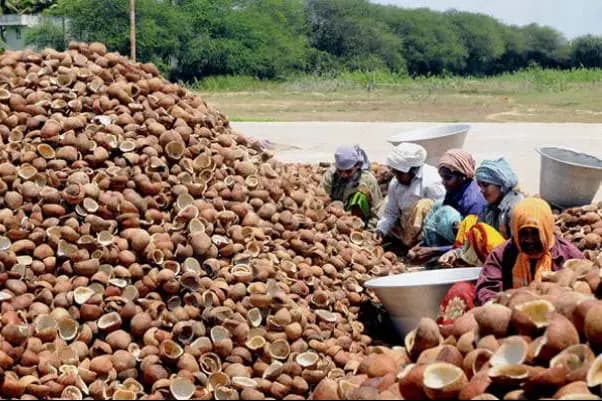
- Dried coconut kernel, produced mainly as feedstock for coconut oil extraction rather than for direct eating. What remains after pressing is copra cake, which goes into animal feed. Dried copra product page
D
- Desiccated Coconut
- Grated, dried, unsweetened coconut meat. It is graded two ways at once, by cut size from extra fine through to flake, and by fat content, and both need to be specified when ordering. Grade guide
E
- EC (Electrical Conductivity)
- A measure of soluble salt level in a hydrated growing medium such as coco peat. Low EC material has been washed, which matters for hydroponics and for salt sensitive crops. Coco peat for hydroponics
F
- FFA (Free Fatty Acid)
- A measure of fat breakdown in an oil, reported on the certificate of analysis. Lower FFA generally indicates fresher raw material and better processing, and it is one of the first numbers an oil buyer checks.
G
- Glycemic Index (GI)
- A measure of how quickly a food raises blood glucose. Reported values for the same ingredient vary between studies and testing methods, and a lab GI figure does not always predict real world blood sugar response. Coconut sugar vs cane sugar GI
H
- HACCP
- Hazard Analysis and Critical Control Points, a food safety management system. Certification means a production process has identified its food safety risks and controls them at the points where control is possible.
- Halal Certification
- Confirmation that a product and its whole production system, including processing aids, equipment, and handling, comply with Halal requirements. It is issued by a recognised certifying body, in Indonesia by MUI. Halal certification guide
I
- Incoterms (EXW, FOB, CIF)
- Standard international shipping terms setting who carries cost and risk at each stage. EXW leaves almost everything to the buyer from the factory gate, FOB transfers risk once goods are loaded on the vessel, and CIF includes freight and insurance to the destination port.
M
- MOQ (Minimum Order Quantity)
- The smallest order a supplier will accept for a given product. It varies with format and packaging, and a trial order is often treated differently from a standard production run.
O
- OEM and Private Label
- Arrangements where a supplier manufactures goods packaged and branded under the buyer own label rather than the supplier brand. In practice it also covers specification changes made for a specific destination market. Private label OEM guide
R
- RBD Coconut Oil
- Refined, bleached, and deodorized coconut oil, produced from copra. It has a neutral flavour and aroma, which suits it to food processing, cosmetics, and industrial applications where coconut taste would interfere. RBD coconut oil product page
V
- VCO (Virgin Coconut Oil)
- Coconut oil extracted from fresh mature coconut meat with minimal refining, typically cold or expeller pressed. It keeps the characteristic coconut aroma and flavour that RBD oil has had removed. Virgin coconut oil product page