
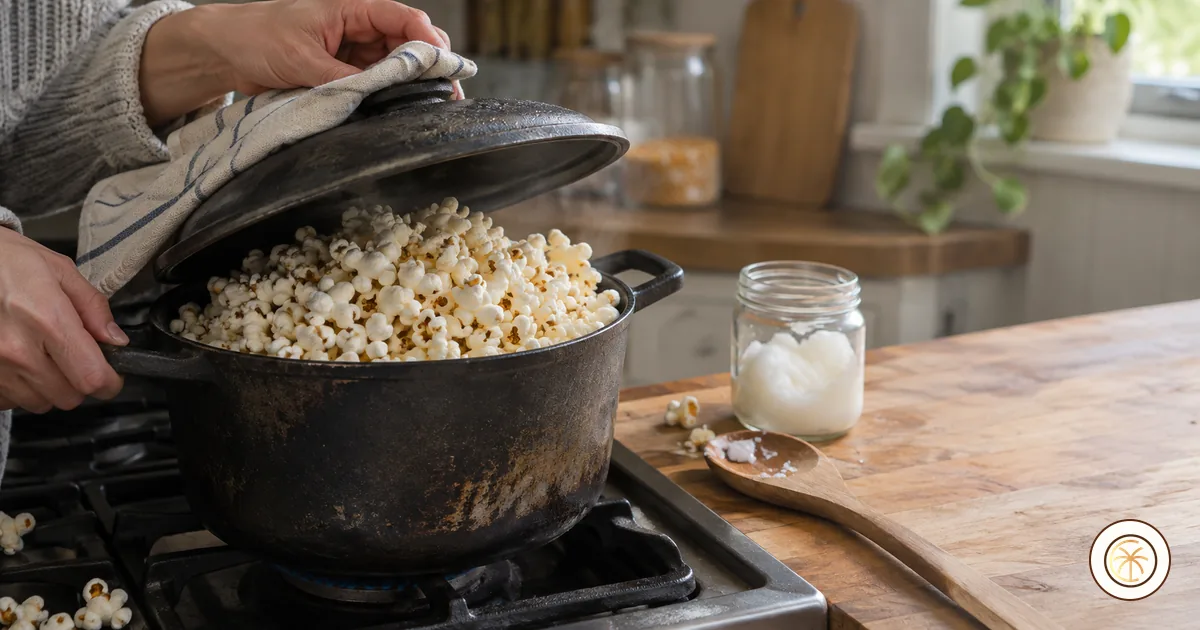
Coconut oil popcorn can be crisp, evenly popped, and lightly aromatic when the pot temperature and oil choice are right. Refined coconut oil gives a neutral, movie-theater-style base, while virgin coconut oil adds a noticeable coconut flavor. Neither option can rescue kernels scorched by excessive heat, so technique matters as much as the ingredient.
This stovetop method uses 1/2 cup popcorn kernels, 3 tablespoons coconut oil, and fine salt. It produces roughly four generous snack portions, depending on kernel variety and how much popcorn your pot can hold safely.
Coconut Oil Popcorn Recipe
Ingredients
- 1/2 cup popcorn kernels
- 3 tablespoons refined or virgin coconut oil
- 1/4 to 1/2 teaspoon fine salt, adjusted to taste
- Optional seasonings such as nutritional yeast, smoked paprika, cinnamon, or finely grated hard cheese
Equipment
- A heavy 4- to 6-quart pot with a lid
- Oven mitts
- A large serving bowl
Instructions
- Put the coconut oil and three test kernels in the pot. Cover and heat over medium heat.
- When the test kernels pop, remove the pot from the heat. Add the remaining kernels in one even layer and cover again.
- Wait about 30 seconds off the heat so the kernels approach a similar temperature.
- Return the pot to medium heat. Gently shake it every few seconds while keeping the lid secure.
- Vent the lid very slightly away from your face so steam can escape without releasing kernels.
- Remove the pot from the heat when popping slows to one pop every two or three seconds.
- Immediately pour the popcorn into a large bowl. Season while warm and toss thoroughly.
The approach follows the same basic stovetop logic used in the Allrecipes coconut oil popcorn recipe: heat the fat, pop the kernels in a covered pot, and season promptly. Never leave hot oil unattended.
Refined or Virgin Coconut Oil for Popcorn?
| Oil | Flavor | Best use | What to watch |
|---|---|---|---|
| Refined coconut oil | Neutral to very mild | Movie-style popcorn, savory seasoning blends | Check that the label permits the intended heat |
| Virgin coconut oil | Distinct coconut aroma | Sweet-salty popcorn and tropical flavor profiles | Flavor may compete with cheese or herb seasonings |
| Canola or sunflower oil | Neutral | Everyday popcorn without coconut | Different fat profile and no coconut character |
| Avocado oil | Mild, depending on brand | Higher-heat popping and savory toppings | Usually more expensive |
| Ghee | Rich and buttery | Buttery popcorn without adding water | Contains dairy and is not vegan |
Virgin coconut oil is pressed from fresh coconut kernel without RBD refining, so its flavor is part of the experience. Refined, bleached, and deodorized coconut oil is made for a more neutral profile. Read Cocopany's VCO versus RBD coconut oil comparison if you need a deeper explanation of the production difference.
Use the product label as the final guide for cooking temperature. Smoke point values vary with processing, quality, and age, and a smoking oil should be discarded rather than used to pop another batch.
Why Coconut Oil Works for Popcorn
Popcorn needs enough fat to transfer heat across the base of the pot and coat the kernels without soaking the finished snack. Coconut oil melts quickly and spreads across the pan. It also firms as it cools, which can make the coating feel less greasy than some liquid oils when used in moderation.
Three tablespoons for 1/2 cup kernels is a practical starting point. Less may work in a well-designed pot, while too much can weigh down the popcorn. The goal is a thin film, not a deep pool.
How to Make Popcorn Crisp Instead of Chewy
Steam is the usual cause of chewy stovetop popcorn. Each kernel releases moisture when it expands. If the lid traps all of that steam, the surface softens.
Vent the lid by a narrow gap once popping begins, keeping the opening pointed away from your face and hands. Use a pot large enough for the popcorn to expand. Transfer the finished popcorn to a bowl immediately instead of leaving it in the warm covered pot.
Fresh kernels matter too. Very old or improperly stored kernels may contain too little internal moisture to pop well, while overly damp storage can produce tough results. Keep unpopped kernels in a tightly closed container at normal pantry temperature.
How to Prevent Burning
Medium heat is more controllable than maximum heat. The three-kernel test shows when the oil is ready without relying on an exact thermometer reading. Moving the pot distributes kernels over the hot surface and reduces scorching.
Take the pot off the burner before popping stops completely. Residual heat will finish a few late kernels. Waiting for silence usually burns the already popped corn at the bottom.
If one batch tastes bitter, clean the pot before starting again. Burnt fragments and degraded oil can spoil the next batch even when the new kernels are cooked correctly.
Movie-Theater-Style Coconut Oil Popcorn
Some theater-style recipes use refined coconut oil, sometimes colored with beta carotene, plus an extra-fine popcorn seasoning. The oil provides the cooking medium, while the seasoning creates much of the familiar salty flavor. Plain coconut oil alone will not reproduce every commercial theater formula.
For a home version, use refined coconut oil and a very fine popcorn salt so it adheres evenly. Start lightly and add more after tossing. Butter contains water, which can soften popcorn, so clarified butter or ghee produces a drier buttery finish. A Food Network guide to popcorn methods also recommends using a heavy pot and stopping when popping slows.
Seasoning Ideas
Seasonings adhere best when ground finely and added while the popcorn is warm.
| Style | Add after popping | Notes |
|---|---|---|
| Classic salty | Fine salt | Start with less and toss before adding more |
| Cheesy | Nutritional yeast or finely grated Parmesan | Parmesan contains dairy and adds moisture |
| Smoky | Smoked paprika, garlic powder, salt | Avoid large granules that fall to the bottom |
| Sweet-spiced | Cinnamon and a small amount of sugar | Add away from direct heat to prevent burning |
| Chili-lime | Chili powder and finely grated lime zest | Add zest just before serving |
| Coconut-forward | Toasted coconut and a pinch of salt | Best with virgin coconut oil |
Avoid pouring watery sauces over the whole bowl if crispness matters. Serve wet dips on the side or season only the portion you will eat immediately.
Nutrition and Portion Context
Air-popped popcorn is a whole-grain food, but oil and toppings add calories, saturated fat, sodium, and sometimes sugar. Coconut oil is high in saturated fat, so the amount used matters. Treat popcorn as a snack and portion it into bowls instead of eating from an oversized cooking vessel.
People following a medically prescribed diet should use the advice provided by their clinician. Coconut oil popcorn is not automatically healthier than popcorn made with another oil, and no single cooking fat determines the quality of an overall diet.
Scaling the Recipe
Do not double the kernels in the same pot unless there is enough expansion space. Overcrowding traps steam and leaves more unpopped kernels. For a party, make consecutive batches and wipe away any browned residue between them.
Commercial snack developers should test oil pickup, seasoning adhesion, oxidative stability, packaging barrier, and shelf life rather than extrapolating from a stovetop recipe. Cocopany's virgin coconut oil guide explains the basic ingredient, while the VCO certificate of analysis guide covers quality parameters for supplier comparison.
Frequently Asked Questions
Is coconut oil good for popping popcorn?
Yes. It transfers heat effectively and coats kernels well. Refined coconut oil is mild, while virgin coconut oil adds a coconut aroma. Use a label-approved cooking temperature and do not let the oil smoke.
How much coconut oil should I use for popcorn?
Start with 3 tablespoons of coconut oil for 1/2 cup kernels in a 4- to 6-quart pot. The base should be coated without leaving the kernels submerged.
Does coconut oil make popcorn taste like a movie theater?
Refined coconut oil can provide part of the theater-style profile, but commercial flavor also comes from very fine seasoning and, in some products, coloring or butter-flavored toppings.
Can I use virgin coconut oil for popcorn?
Yes, if you enjoy a coconut flavor. Keep the heat controlled and follow the product label because processing and recommended uses vary by brand.
Why is my stovetop popcorn chewy?
Trapped steam is the most common cause. Vent the lid slightly, avoid overcrowding, and move the finished popcorn to an open bowl immediately.
Why are there many unpopped kernels?
The oil may have been too cool, the pot may have heated unevenly, or the kernels may be old or improperly stored. Use test kernels and shake the pot gently during popping.
Can I store coconut oil popcorn?
It is best fresh. Once fully cool, store it in an airtight container for a short period at room temperature. Humidity and wet toppings quickly reduce crispness.
Final Takeaway
Use controlled medium heat, vent steam, and remove the pot as popping slows. Choose refined coconut oil for a neutral base or virgin coconut oil for coconut aroma. Food brands and bulk buyers can review Cocopany's organic virgin coconut oil specification when sourcing documented VCO for product development.