
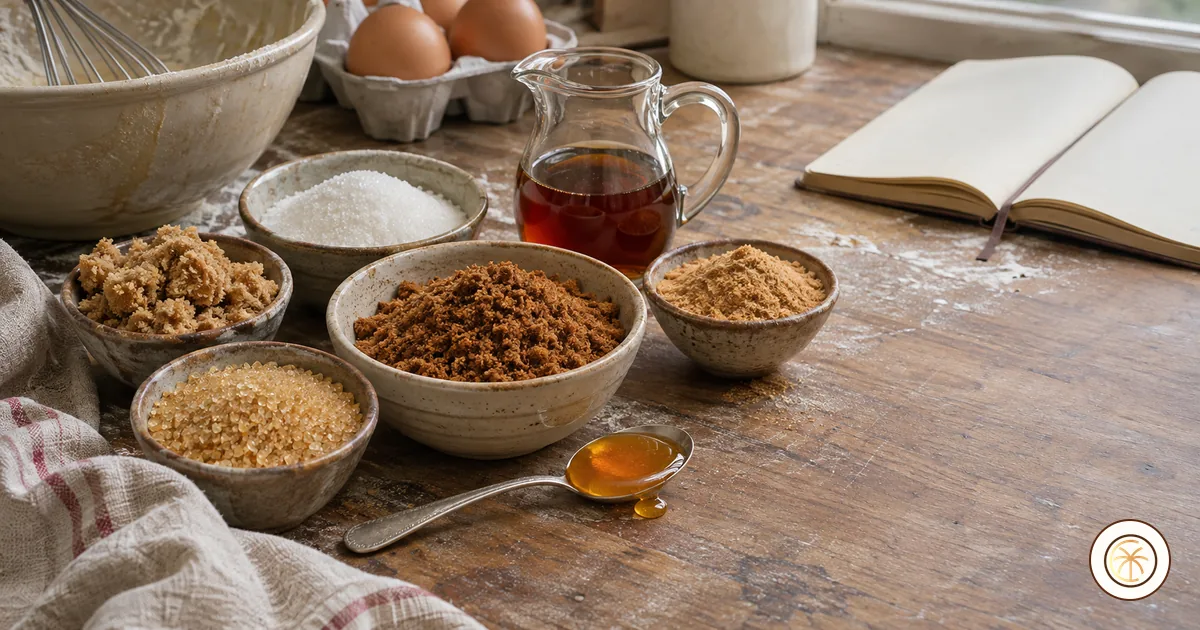
Light brown sugar is the simplest coconut sugar substitute for most baking because it has a similar caramel profile and can usually be used 1:1 by volume. White sugar, raw cane sugar, maple sugar, date sugar, honey, and maple syrup can also work, but each changes sweetness, moisture, color, or texture.
Choose the replacement by function. A dry granulated sugar is safer for cookies and cakes that depend on creaming or spread. A liquid sweetener is easier in sauces, oatmeal, and drinks, but it requires recipe adjustments in baking.
Quick Coconut Sugar Substitute Chart
| Substitute | Starting ratio for 1 cup coconut sugar | Best use | Main change |
|---|---|---|---|
| Light brown sugar | 1 cup | Cookies, cakes, sauces | Slightly moister, molasses flavor |
| White granulated sugar | 1 cup | Cakes, drinks, general baking | Lighter color and cleaner sweetness |
| Raw cane or turbinado sugar | 1 cup | Crumbles, cookies, toppings | Coarser crystals may not dissolve fully |
| Maple sugar | 1 cup | Baking, oatmeal, dry mixes | Clear maple flavor, often expensive |
| Date sugar | 1 cup | Muffins, quick breads, toppings | Does not dissolve like crystalline sugar |
| Jaggery or palm sugar | 1 cup, grated or measured by weight | Sauces, curries, spiced baking | Flavor and moisture vary widely |
| Maple syrup | 3/4 cup | Sauces, muffins, moist cakes | Adds liquid and maple flavor |
| Honey | 2/3 to 3/4 cup | Glazes, quick breads, dressings | Sweeter, adds liquid, not vegan |
| Monk fruit or erythritol blend | Follow brand conversion | Reduced-sugar recipes | Different bulk, browning, cooling effect |
These are test ratios, not universal guarantees. For high-precision baking, candy, jam, or commercial production, use a recipe developed for the chosen sweetener.
1. Light Brown Sugar
Light brown sugar is the best all-purpose replacement. Use it 1:1 by volume or, preferably, match the recipe's gram weight. It brings caramel flavor and supports browning, cookie spread, and moisture retention.
Because brown sugar contains molasses, the result may be softer or chewier than coconut sugar. Dark brown sugar works too but adds a stronger molasses taste. This swap is ideal for cookies, banana bread, muffins, brownies, barbecue sauce, and oatmeal.
2. White Granulated Sugar
White sugar can replace coconut sugar 1:1 in many recipes. The finished food will be lighter in color and lack the toasted flavor. Cookies may become crisper, while cakes may taste cleaner and sweeter.
Add a small amount of molasses only if the caramel note is important. Avoid randomly adding extra liquid to delicate recipes. A direct white-sugar swap is more predictable than trying to rebuild coconut sugar with several ingredients.
3. Raw Cane or Turbinado Sugar
Raw cane sugars provide large crystals and a light molasses flavor. Use a 1:1 starting ratio in crumbles, cookies, toppings, coffee, and sauces. Coarse crystals can remain gritty in smooth cake batter or frosting.
If texture matters, pulse the sugar briefly to reduce crystal size, then measure by weight. Do not substitute powdered sugar, because its fine texture and added starch behave differently.
4. Maple Sugar
Maple sugar is a dry, granulated substitute that works 1:1 in many baked goods. It contributes maple aroma and generally preserves the dry-to-liquid balance better than maple syrup. It can be expensive and its flavor is more recognizable than coconut sugar.
Use it in muffins, granola, spice cakes, oatmeal, and dry baking mixes. In a delicate vanilla recipe, its maple note may dominate.
5. Date Sugar
Date sugar is made from dried, ground dates rather than crystallized sap. It adds fruit solids and fiber but does not dissolve like coconut sugar. Use it 1:1 as a first test in muffins, quick breads, crumbles, or oatmeal.
It is a poor choice for clear drinks, smooth caramel, hard candy, or recipes requiring complete dissolution. Expect a darker, denser result and visible flecks.
6. Jaggery or Other Palm Sugar
Jaggery and palm sugars can provide deep caramel flavor in sauces, curries, drinks, and spiced desserts. Products vary in botanical source, moisture, form, and sweetness. Grate a block before measuring and start with equal weight rather than packing irregular pieces into a cup.
Do not assume all palm sugar is coconut sugar. Cocopany's coconut sugar versus cane sugar guide explains how coconut sugar differs and why broad health claims need careful substantiation.
7. Maple Syrup
Use about 3/4 cup maple syrup for 1 cup coconut sugar, then reduce another liquid in the recipe. A practical starting adjustment is to remove 2 to 4 tablespoons of other liquid, but the correct amount depends on the batter.
The King Arthur Baking guide to liquid sweeteners shows why a liquid swap affects browning, texture, and hydration rather than only sweetness. Maple syrup works well in sauces, dressings, oatmeal, muffins, and moist snack cakes. It is unreliable in crisp cookies, meringue, or candy unless the recipe was designed for syrup.
8. Honey
Start with 2/3 to 3/4 cup honey for 1 cup coconut sugar. Reduce other liquid slightly and watch browning because honey can color quickly. It works in glazes, marinades, dressings, quick breads, and soft cakes.
Honey is not vegan, has a distinct aroma, and should never be given to infants younger than 12 months. It also changes water activity and shelf life, which matters in packaged products.
9. Monk Fruit or Erythritol Blends
Use the manufacturer's conversion chart because concentrated monk fruit is much sweeter than sugar, while retail blends are diluted to different strengths. Sugar does more than sweeten: it creates bulk, browning, spread, tenderness, and moisture retention.
A 1:1-branded blend may still produce a cooler taste, drier crumb, less browning, or digestive discomfort in some people. Begin with a tested recipe rather than replacing the entire sugar quantity in a formula developed for coconut sugar.
Choosing the Best Substitute by Recipe
| Recipe | Best first choice | Why |
|---|---|---|
| Cookies | Light brown sugar | Similar bulk, caramel flavor, and browning |
| Cakes and muffins | Brown or white sugar | Maintains dry ingredient balance |
| Granola and oatmeal | Maple sugar, brown sugar, or maple syrup | Flavor fits and texture is flexible |
| Sauce or marinade | Brown sugar, jaggery, honey, or maple syrup | Easy to dissolve and adjust by taste |
| Coffee or tea | White sugar, maple sugar, or syrup | Dissolves readily in warm liquid |
| Frosting | Fine white or brown sugar in a tested recipe | Coarse substitutes may feel gritty |
| Candy or caramel | Use the specified sugar | Crystallization and temperature are critical |
The four-reference review supplied for this article reaches a similar practical conclusion: dry 1:1 swaps are simplest, while liquid sweeteners need hydration changes. The What Molly Made substitution guide also separates direct swaps from liquid alternatives and emphasizes recipe-specific adjustment.
Is a Substitute Healthier?
Brown sugar, white sugar, maple syrup, honey, jaggery, and coconut sugar all contribute sugars. Trace nutrients or a different glycemic index do not make unlimited intake appropriate. Sugar-alcohol and high-intensity sweetener blends can reduce sugar in a formula but introduce different taste, digestive, and functional constraints.
Choose based on dietary needs and recipe performance, then consider total serving size. For commercial products, nutrition and claims need calculation and regulatory review after the formula is finalized.
Testing a Substitution
- Identify whether the recipe needs dry bulk, dissolved sweetness, or caramel flavor.
- Change only the sweetener in the first test.
- Weigh ingredients rather than relying only on cups.
- Record batter consistency, spread, bake time, color, and final texture.
- Adjust liquid in small increments on the next test.
- Validate shelf life separately for packaged food.
Cocopany's coconut sugar specification guide explains quality attributes buyers should define. The product catalog provides context for other coconut ingredients used in formulation.
Frequently Asked Questions
What is the best substitute for coconut sugar?
Light brown sugar is the most reliable all-purpose replacement. Use it 1:1 and expect a slightly moister result with a mild molasses flavor.
Can white sugar replace coconut sugar?
Yes, use a 1:1 starting ratio. The finished recipe will be lighter in color and have less caramel flavor.
Can maple syrup replace coconut sugar?
Yes, start with 3/4 cup maple syrup for 1 cup coconut sugar and reduce another liquid. It works better in moist cakes, sauces, and drinks than in crisp cookies.
Can honey replace coconut sugar?
Use 2/3 to 3/4 cup honey per cup of coconut sugar and reduce other liquid slightly. Honey is sweeter, browns faster, and is not vegan.
Can brown sugar replace coconut sugar 1:1?
Usually yes in cookies, muffins, cakes, and sauces. Measure by weight for the most consistent result.
What is a sugar-free substitute for coconut sugar?
A monk fruit or erythritol blend may work, but follow its package conversion. It will not necessarily reproduce sugar's bulk, browning, moisture, or texture.
Can I use date sugar instead of coconut sugar?
Yes in rustic baked goods and toppings, starting 1:1. Date sugar does not fully dissolve, so it is unsuitable for clear drinks, smooth caramel, and many candies.
Final Takeaway
Use light brown sugar for the closest everyday swap, white sugar for neutral sweetness, and maple sugar for a dry plant-based alternative. Treat syrups as formula changes, not simple 1:1 replacements. When the original ingredient remains the best choice, food brands and importers can review Cocopany's organic coconut sugar specification for available grades, granulation, certifications, and packing.