

Coco fiber roll has been one timeless staple for gardening. But do you know what coco fiber is? Coco fiber or coconut fiber or coco coir is something that is made of coconut fruit’s husk. This is used in almost everything like in home décor and even construction.
If you really love gardening, you need to understand what coco coir is. It is able to provide the soil structure, aeration, and drainage in order to keep your plants healthy. Coco coir is a material that is environmentally friendly especially compared to peat moss.
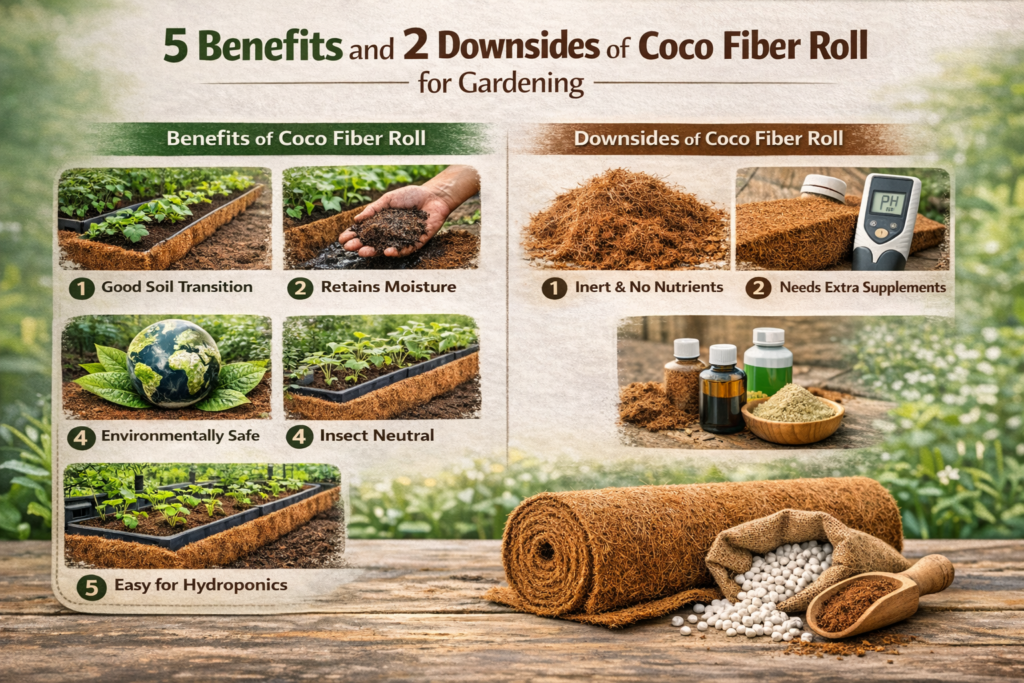
Various Benefits of Coco Fiber Roll
Coco fiber or coco coir comes with various benefits. But coco coir is just like the other growing media, it has some downsides you need to consider before you buy this product for your garden. However, below are some benefits you will get by using coco coir.
- Good soil gardening transition
Growing plants in coco coir is like growing plants in soil. Both media look just the same. You can even create a completely hydroponic garden that looks the same as the soil garden. What makes it different is that you can water your coco fiber garden with nutrient enriched water instead of regular water.
- Provide excellent environment and retain moisture
Coco fiber roll is well known as a growing media that is totally effective for water retention. This media can absorb water up to ten times its weight. This means your plants’ roots will never experience dehydration. This is going to promote a root development that is healthier.
- Environmentally safe
Sphagnum peat moss has a lot of fans out there. But peat moss creates environmental concerns you need to learn before using it. Coco fiber doesn’t have environmental problems. This media can be used several times unlike the peat moss.
Coco coir is also one of the repurposed waste products that comes from renewable resources. It makes coco coir different from peat bogs.
- Insect neutral
Many garden pests don’t want to stay in your coconut coir. If you love some plants that are also loved by the bugs or pests, you need to use coco coir or coconut fiber in order to protect your beloved plants from those destructive insects.
- Less complex compared to traditional hydroponics
If you are a newborn in hydroponics, you need to consider choosing coconut fiber as your first step. Practicing the basics of a hydroponic garden is a lot easier with coco fiber roll since you don’t have to build or buy a hydroponic system and perform the entire maintenance that is required.
Downside of Coco Coir for Gardening
Coco coir also comes with several downsides just like some other media to support your gardening activities. Before purchasing coco coir and starting gardening, you need to learn about the downsides of coco fiber below.
- Coconut fiber is inert
This means coconut fiber doesn’t contain any nutrients inside it. The look of coco fiber may be similar to soil but this is not a soil. Since coco fiber doesn’t contain nutrients, you need to add some hydroponic nutrients while controlling the pH level when you are using this fiber roll.
- Coco fiber roll needs extra supplementation
When you use coco fiber, you may figure out that the plants are short on magnesium and calcium. You need to provide an extra supplement to increase the magnesium and supplement of your plants. The other fertilizers may also be necessary as well because coco fiber also has NPK in low levels.
—
Once you understand the benefits and downsides of coco fiber roll, you need to get this product from the right place. Our website is the best source where you can get everything you need to start gardening. Try to find all the items you need from us before you start beautifying your garden.
What This Guide Helps You Decide
Coco Fiber Roll for Gardening Benefits and Drawbacks should answer a practical question: whether the offered coconut fiber is suitable for a defined product, process, and destination market. Start with the intended use, then translate that use into measurable requirements. A broad label or attractive sample is not enough. The decision needs an agreed specification, a representative production sample, and records that connect every result to a lot.
For the target term Coco Fiber Roll for Gardening: Benefits and Drawbacks, the useful answer is not a universal grade. The correct choice depends on the process, equipment, formulation, packing format, storage period, and local requirements. Buyers should separate mandatory limits from preferences so quotations remain comparable and suppliers know which deviations require approval.
Evaluation Framework for coconut fiber
| Review area | What to confirm | Why it matters |
|---|---|---|
| Intended use | Product, process, dosage, and performance target | Prevents approval of a technically unsuitable grade |
| Core quality | fiber length, moisture, impurities | Converts the commercial name into measurable acceptance criteria |
| Consistency | Lot range, sampling point, and test frequency | Shows whether repeat shipments can match the approved sample |
| Documents | Specification, COA, traceability, and declarations | Connects claims and test results to the supplied lot |
| Logistics | Packing, quantity, Incoterm, and storage conditions | Protects quality and makes delivered-cost comparisons fair |
The table is a starting framework, not a substitute for a product-specific contract. Test methods, units, tolerances, and sampling rules should be written beside every critical parameter. When a result is disputed, both parties then have the same basis for retesting and resolution.
How to Qualify a Sample and Production Lot
First request a representative sample and the supplier's current specification. Evaluate fiber length, moisture, and impurities using the same method that will be used for production lots. Record preparation conditions because hydration, temperature, grinding, or storage can change the apparent result. A sample without a lot code or test date is useful for exploration but weak evidence for approval.
Next, run the sample in the real application. Laboratory conformity does not automatically prove processing performance, flavor compatibility, handling behavior, or finished-product stability. Document the trial conditions, acceptance criteria, and result. If the application changes, repeat the trial instead of assuming that the first approval remains valid.
Finally, compare the first commercial lot with the retained approval sample and certificate of analysis. Inspect packaging and labeling before release. Keep the purchase specification, COA, inspection record, and complaint procedure together. This creates a traceable decision rather than relying on email claims or memory.
Commercial Questions That Prevent Misunderstandings
Ask who controls production, testing, packing, and export documentation. Confirm whether the quotation covers the same grade, packing, tolerance, inspection basis, and delivery term. A lower unit price may exclude testing, inner liners, palletization, or inland transport. Compare the delivered offer only after these differences are normalized.
For repeat orders, define change control. The supplier should disclose meaningful changes to raw material, process, test method, factory, or packaging before shipment. Agree how nonconforming lots will be quarantined, retested, replaced, or credited. These details are especially important when resilience and bale consistency affect finished-product performance.
Common Mistakes to Avoid
- Approving coconut fiber from a sales description without numerical limits or test methods.
- Treating one small sample as proof of long-term production consistency.
- Comparing prices that use different packing, moisture basis, quantities, or Incoterms.
- Accepting a certificate that cannot be connected to the delivered lot.
- Making health, sustainability, or performance claims that exceed the available evidence.
Related Reading
- rbd coconut oil manufacturer
- rbd coconut oil prices
- RBD Coconut Oil Specifications: Refined, Bleached, and Deodorized Standards
- rbd coconut oil usage
Frequently Asked Questions
What should a buyer check first for coconut fiber?
Start with the intended application and convert it into a written specification. Identify the critical limits for fiber length, moisture, and impurities. Confirm the test methods, units, sampling plan, packaging, and destination requirements before comparing quotations or approving a sample.
Is a certificate of analysis enough to approve coconut fiber?
No. A certificate of analysis is useful only when it identifies the lot, methods, date, and relevant results. Buyers should also review a representative sample, run an application trial, inspect packaging, and verify that the supplier can reproduce the approved quality during commercial production.
How many samples should be evaluated before ordering?
There is no universal number, but the sample must represent the proposed production grade and packing. For a critical application, compare more than one lot or production date. Keep an approved reference sample, record the trial conditions, and define what must be retested before shipment.
How should competing coconut fiber quotations be compared?
Normalize the grade, specification, dry or wet basis, packing, quantity tolerance, inspection scope, Incoterm, and payment terms. Then compare usable product and delivered cost. A headline price can be misleading when suppliers include different testing, liners, pallets, documents, or inland logistics.
What should be agreed for repeat coconut fiber orders?
Use the same specification revision, test methods, acceptance limits, and sampling plan for every lot. Require traceable certificates and advance notice of process or packing changes. Retain samples and review trends so gradual shifts in resilience or bale consistency are detected early.