
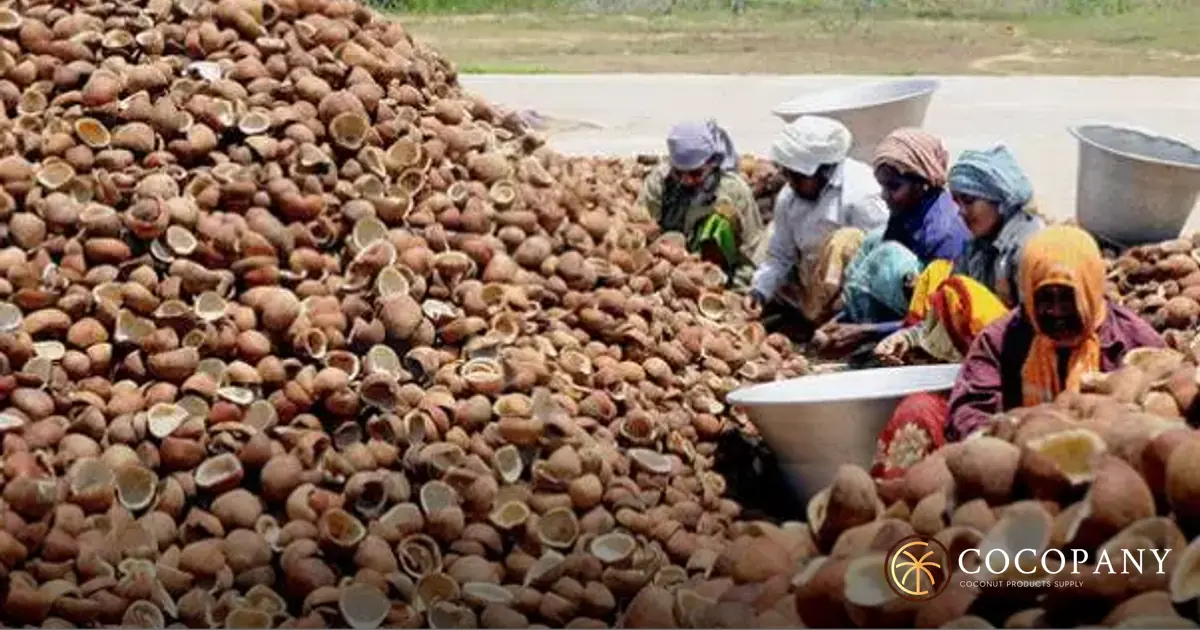
Coconut meat can be sold fresh or converted into shelf-stable ingredients for bakery, confectionery, beverages, sauces, snacks, and personal-care manufacturing. The right coconut meat product depends on the function required: texture, flavor, fat, moisture, particle size, or extraction yield.
Main Types of Coconut Meat Products
| Product | Basic process | Key characteristic | Common applications |
|---|---|---|---|
| Fresh or frozen meat | Cutting, cleaning, chilling or freezing | Moist texture and fresh flavor | Food service, curries, desserts |
| Desiccated coconut | Shredding and controlled drying | Low moisture and defined cut size | Bakery, confectionery, cereals |
| Coconut chips or flakes | Slicing and drying or toasting | Visible pieces and crisp texture | Snacks, toppings, granola |
| Coconut milk | Wet milling and liquid extraction | Pourable coconut emulsion | Sauces, beverages, soups |
| Coconut cream | Concentrated extraction | Higher solids and richer texture | Desserts, culinary sauces |
| Coconut flour | Drying and milling coconut solids | Fine powder with useful fiber | Baking and dry mixes |
| Coconut oil | Mechanical or wet extraction | Concentrated fat | Food, cosmetics, soap |
The FAO coconut post-harvest compendium describes how mature coconut kernel is processed into desiccated coconut and other products. Processing details matter because poor drying, sanitation, or packaging can reduce shelf life and create food-safety risks.
Desiccated Coconut
Desiccated coconut is grated or shredded mature kernel that has been dried to a controlled moisture level. Manufacturers choose fine, medium, coarse, shredded, or flaked cuts based on the desired texture and visual appearance.
Bakery buyers often need even distribution in dough or fillings, while confectionery producers may prefer a more visible cut. Review the desiccated coconut grade comparison before approving a mesh size.
Coconut Milk and Coconut Cream
Coconut milk and cream are emulsions produced from coconut kernel. Their fat and total-solids levels vary, so the same product name can describe very different formulations. Buyers should specify fat range, viscosity, stabilizers, heat treatment, microbiological limits, packaging, and intended use.
Cream is generally chosen when richness and body are important. Milk is more suitable when a pourable texture or lower concentration is required. Both products need controlled processing and packaging because their higher moisture makes them more perishable than dry ingredients.
Coconut Flour, Chips, and Flakes
Coconut flour may be produced from dried kernel or from solids remaining after milk or oil extraction. This affects fat, fiber, flavor, and water absorption. A bakery trial is essential because coconut flour does not behave like wheat flour and can change dough hydration.
Chips and flakes are used where appearance and crunch matter. Buyers should define thickness, size distribution, toasted or untoasted status, added sugar, color, and breakage tolerance.
Coconut Oil from Coconut Meat
Fresh coconut meat can be processed into virgin coconut oil, while dried copra is commonly used for crude oil that is later refined. These products have different flavor, processing, and specification profiles. For a clearer comparison, see our virgin coconut oil and RBD coconut oil buyer guide.
Quality Checks for Commercial Buyers
Raw-material condition
The kernel should be mature, sound, and free from rancid odors, mold, shell fragments, and foreign material. The maturity and storage of the coconut affect flavor and processing yield.
Moisture and water activity
Dry products need controlled moisture to protect texture and shelf stability. Liquid products require validated heat treatment and microbiological controls. A single moisture target should not be copied across every coconut product.
Sensory and physical specifications
Define color, aroma, flavor, particle size, viscosity, fat level, and acceptable visual defects. Product samples should be tested in the buyer's actual formulation, not only inspected in isolation.
Food-safety documentation
Request a lot-specific certificate of analysis, allergen statement, traceability documents, microbiological results, and applicable food-safety certifications. The FAO and WHO Codex system emphasizes hygiene controls in coconut processing because contamination can occur during handling, drying, cooling, and packaging.
Packaging and logistics
Dry products need moisture- and odor-resistant packaging. Liquid products may use cans, aseptic packs, drums, or intermediate bulk containers. Confirm net weight, pallet configuration, container loading, shelf life, and storage temperature before shipment.
Matching the Product to the Application
For visible bakery toppings, choose flakes or chips. For evenly distributed texture, use a fine or medium desiccated grade. For sauces and beverages, compare coconut milk and cream by fat and total solids. For high-fiber dry formulations, evaluate coconut flour in a pilot batch.
Cocopany's desiccated coconut supply page provides a starting point for product discussions. Buyers should send a written specification and request representative samples before negotiating a production order.
What This Guide Helps You Decide
Coconut Meat Products Types, Uses, and Quality Guide should answer a practical question: whether the offered coconut meat is suitable for a defined product, process, and destination market. Start with the intended use, then translate that use into measurable requirements. A broad label or attractive sample is not enough. The decision needs an agreed specification, a representative production sample, and records that connect every result to a lot.
For the target term coconut meat products, the useful answer is not a universal grade. The correct choice depends on the process, equipment, formulation, packing format, storage period, and local requirements. Buyers should separate mandatory limits from preferences so quotations remain comparable and suppliers know which deviations require approval.
Evaluation Framework for coconut meat
| Review area | What to confirm | Why it matters |
|---|---|---|
| Intended use | Product, process, dosage, and performance target | Prevents approval of a technically unsuitable grade |
| Core quality | freshness, moisture, cut or particle size | Converts the commercial name into measurable acceptance criteria |
| Consistency | Lot range, sampling point, and test frequency | Shows whether repeat shipments can match the approved sample |
| Documents | Specification, COA, traceability, and declarations | Connects claims and test results to the supplied lot |
| Logistics | Packing, quantity, Incoterm, and storage conditions | Protects quality and makes delivered-cost comparisons fair |
The table is a starting framework, not a substitute for a product-specific contract. Test methods, units, tolerances, and sampling rules should be written beside every critical parameter. When a result is disputed, both parties then have the same basis for retesting and resolution.
How to Qualify a Sample and Production Lot
First request a representative sample and the supplier's current specification. Evaluate freshness, moisture, and cut or particle size using the same method that will be used for production lots. Record preparation conditions because hydration, temperature, grinding, or storage can change the apparent result. A sample without a lot code or test date is useful for exploration but weak evidence for approval.
Next, run the sample in the real application. Laboratory conformity does not automatically prove processing performance, flavor compatibility, handling behavior, or finished-product stability. Document the trial conditions, acceptance criteria, and result. If the application changes, repeat the trial instead of assuming that the first approval remains valid.
Finally, compare the first commercial lot with the retained approval sample and certificate of analysis. Inspect packaging and labeling before release. Keep the purchase specification, COA, inspection record, and complaint procedure together. This creates a traceable decision rather than relying on email claims or memory.
Commercial Questions That Prevent Misunderstandings
Ask who controls production, testing, packing, and export documentation. Confirm whether the quotation covers the same grade, packing, tolerance, inspection basis, and delivery term. A lower unit price may exclude testing, inner liners, palletization, or inland transport. Compare the delivered offer only after these differences are normalized.
For repeat orders, define change control. The supplier should disclose meaningful changes to raw material, process, test method, factory, or packaging before shipment. Agree how nonconforming lots will be quarantined, retested, replaced, or credited. These details are especially important when sensory quality and intended recipe affect finished-product performance.
Common Mistakes to Avoid
- Approving coconut meat from a sales description without numerical limits or test methods.
- Treating one small sample as proof of long-term production consistency.
- Comparing prices that use different packing, moisture basis, quantities, or Incoterms.
- Accepting a certificate that cannot be connected to the delivered lot.
- Making health, sustainability, or performance claims that exceed the available evidence.
Related Reading
- Desiccated Coconut Fine vs Medium vs Coarse: Which Grade for Manufacturing?
- Desiccated Coconut for Bakery: High Fat vs Low Fat
- Desiccated Coconut Moisture Content: What Buyers Should Specify
- Desiccated Coconut Packaging for Export: PP Bag vs Paper Sack
Frequently Asked Questions
What should a buyer check first for coconut meat?
Start with the intended application and convert it into a written specification. Identify the critical limits for freshness, moisture, and cut or particle size. Confirm the test methods, units, sampling plan, packaging, and destination requirements before comparing quotations or approving a sample.
Is a certificate of analysis enough to approve coconut meat?
No. A certificate of analysis is useful only when it identifies the lot, methods, date, and relevant results. Buyers should also review a representative sample, run an application trial, inspect packaging, and verify that the supplier can reproduce the approved quality during commercial production.
How many samples should be evaluated before ordering?
There is no universal number, but the sample must represent the proposed production grade and packing. For a critical application, compare more than one lot or production date. Keep an approved reference sample, record the trial conditions, and define what must be retested before shipment.
How should competing coconut meat quotations be compared?
Normalize the grade, specification, dry or wet basis, packing, quantity tolerance, inspection scope, Incoterm, and payment terms. Then compare usable product and delivered cost. A headline price can be misleading when suppliers include different testing, liners, pallets, documents, or inland logistics.
What should be agreed for repeat coconut meat orders?
Use the same specification revision, test methods, acceptance limits, and sampling plan for every lot. Require traceable certificates and advance notice of process or packing changes. Retain samples and review trends so gradual shifts in sensory quality or intended recipe are detected early.