
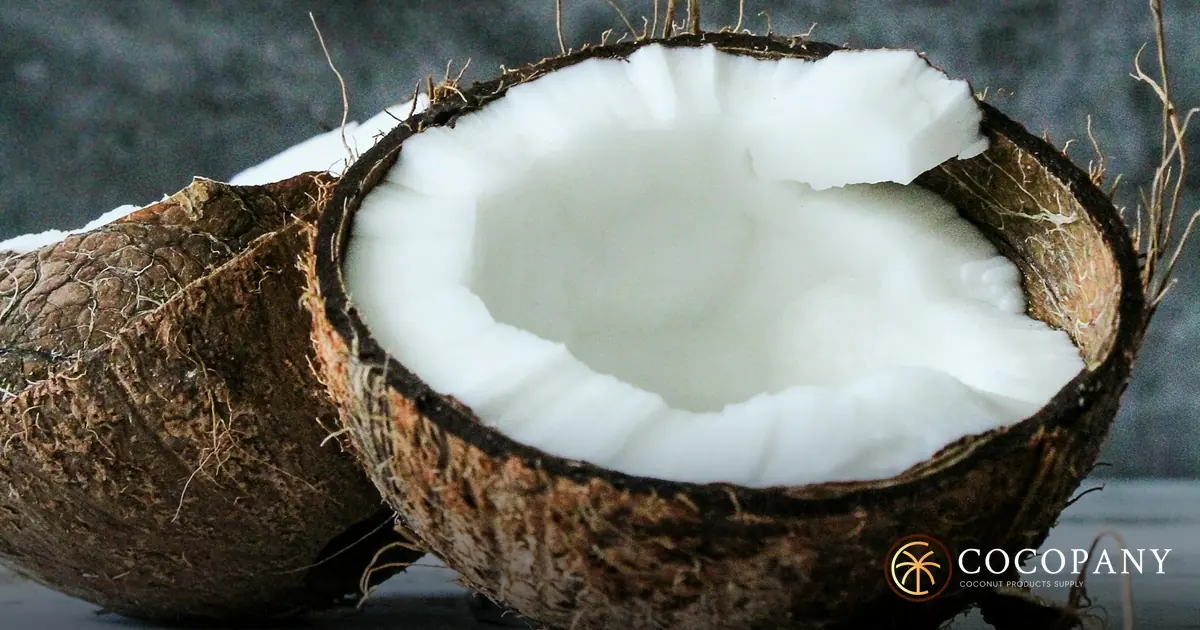
Coconut meat is the white edible flesh inside a mature coconut. It can be eaten fresh, grated, dried, toasted, pressed into coconut milk, or processed into ingredients such as desiccated coconut, flour, cream, and oil. Its nutrition changes with serving size and processing, so fresh coconut meat and dried coconut should not be treated as identical products.
What Is Coconut Meat Made Of?
Fresh mature coconut meat contains water, fat, carbohydrate, fiber, and small amounts of protein. It also provides minerals such as manganese, copper, iron, magnesium, and potassium. The University of Guam coconut nutrition guide lists raw shredded coconut as a source of dietary fiber and several minerals.
Most of the calories in mature coconut meat come from fat, and much of that fat is saturated. This does not make coconut meat forbidden, but it makes portion size and the rest of the diet important.
| Form | Water content | Texture | Typical use | Nutrition consideration |
|---|---|---|---|---|
| Fresh mature meat | Higher | Firm and moist | Snacks, curries, salads, milk | Lower calorie density than dried coconut |
| Desiccated coconut | Low | Dry, grated, or shredded | Bakery, confectionery, mixes | More concentrated calories and fat per gram |
| Coconut flour | Very low | Fine powder | Baking and food formulations | Often higher in fiber after oil extraction |
| Coconut milk or cream | Liquid | Pourable to thick | Sauces, beverages, desserts | Fat level varies by dilution and formulation |
Coconut Meat Nutrition in a Balanced Diet
Coconut meat contributes fiber, which can support normal bowel function and increase the texture and satiety of a meal. It also contains energy-dense fat. A practical serving should therefore be considered alongside other fats in the meal rather than added without limit.
The World Health Organization healthy-diet guidance recommends keeping saturated fat below 10 percent of total energy and favoring unsaturated fats where possible. People managing high LDL cholesterol or cardiovascular risk should ask a qualified health professional how coconut products fit their individual diet.
Potential Benefits Without Overstating the Evidence
Fiber and meal satisfaction
The fiber in coconut meat can add bulk and texture to meals. Fiber intake is associated with digestive regularity, but coconut meat is only one possible source. Vegetables, fruits, legumes, and whole grains provide fiber with different nutrient profiles.
Useful minerals
Coconut meat supplies several minerals involved in normal metabolism. The exact amount depends on maturity, variety, growing conditions, serving size, and whether the product is fresh or dried. Nutrition labels or verified food-composition databases are better references than broad marketing claims.
Versatile food applications
Fresh coconut contributes flavor and texture without requiring complicated preparation. Dried and processed forms are easier to store and standardize for manufacturing. These practical benefits are clearer than claims that coconut meat can cure disease, detoxify the body, or automatically cause weight loss.
Fresh Coconut Meat vs Dried Coconut
Drying removes water, so nutrients and calories become more concentrated by weight. Desiccated coconut is useful when a manufacturer needs consistent particle size, lower moisture, and longer storage, while fresh meat is better when moisture and a softer texture are desired.
For commercial applications, review Cocopany's desiccated coconut product information. Buyers should also compare desiccated coconut grades and mesh sizes rather than selecting a product by price alone.
How Coconut Meat Is Used
Coconut meat can be grated into rice dishes, curries, salads, desserts, and baked goods. It can also be blended and strained to make coconut milk, dried into chips, ground into flour, or pressed to separate oil.
If you have fresh coconut available, our guide to practical coconut meat uses explains storage and preparation options. Manufacturers can compare the wider range of coconut meat products for different formulations.
Choosing and Storing Coconut Meat
Choose fresh mature coconut with no sour smell, visible mold, or unusual discoloration. Once opened, keep the meat refrigerated in a clean, sealed container and use it promptly. Frozen grated coconut can be useful for longer storage, while commercially dried products should be kept sealed away from moisture, heat, sunlight, and strong odors.
Packaged products should include traceable lot information, a best-before date, storage instructions, and an intact seal. Commercial buyers should request moisture, microbiological, and sensory specifications appropriate to the intended market.
What This Guide Helps You Decide
What Is Coconut Meat Nutrition, Uses, and Benefits should answer a practical question: whether the offered coconut meat is suitable for a defined product, process, and destination market. Start with the intended use, then translate that use into measurable requirements. A broad label or attractive sample is not enough. The decision needs an agreed specification, a representative production sample, and records that connect every result to a lot.
For the target term coconut meat nutrition, the useful answer is not a universal grade. The correct choice depends on the process, equipment, formulation, packing format, storage period, and local requirements. Buyers should separate mandatory limits from preferences so quotations remain comparable and suppliers know which deviations require approval.
Evaluation Framework for coconut meat
| Review area | What to confirm | Why it matters |
|---|---|---|
| Intended use | Product, process, dosage, and performance target | Prevents approval of a technically unsuitable grade |
| Core quality | freshness, moisture, cut or particle size | Converts the commercial name into measurable acceptance criteria |
| Consistency | Lot range, sampling point, and test frequency | Shows whether repeat shipments can match the approved sample |
| Documents | Specification, COA, traceability, and declarations | Connects claims and test results to the supplied lot |
| Logistics | Packing, quantity, Incoterm, and storage conditions | Protects quality and makes delivered-cost comparisons fair |
The table is a starting framework, not a substitute for a product-specific contract. Test methods, units, tolerances, and sampling rules should be written beside every critical parameter. When a result is disputed, both parties then have the same basis for retesting and resolution.
How to Qualify a Sample and Production Lot
First request a representative sample and the supplier's current specification. Evaluate freshness, moisture, and cut or particle size using the same method that will be used for production lots. Record preparation conditions because hydration, temperature, grinding, or storage can change the apparent result. A sample without a lot code or test date is useful for exploration but weak evidence for approval.
Next, run the sample in the real application. Laboratory conformity does not automatically prove processing performance, flavor compatibility, handling behavior, or finished-product stability. Document the trial conditions, acceptance criteria, and result. If the application changes, repeat the trial instead of assuming that the first approval remains valid.
Finally, compare the first commercial lot with the retained approval sample and certificate of analysis. Inspect packaging and labeling before release. Keep the purchase specification, COA, inspection record, and complaint procedure together. This creates a traceable decision rather than relying on email claims or memory.
Commercial Questions That Prevent Misunderstandings
Ask who controls production, testing, packing, and export documentation. Confirm whether the quotation covers the same grade, packing, tolerance, inspection basis, and delivery term. A lower unit price may exclude testing, inner liners, palletization, or inland transport. Compare the delivered offer only after these differences are normalized.
For repeat orders, define change control. The supplier should disclose meaningful changes to raw material, process, test method, factory, or packaging before shipment. Agree how nonconforming lots will be quarantined, retested, replaced, or credited. These details are especially important when sensory quality and intended recipe affect finished-product performance.
Common Mistakes to Avoid
- Approving coconut meat from a sales description without numerical limits or test methods.
- Treating one small sample as proof of long-term production consistency.
- Comparing prices that use different packing, moisture basis, quantities, or Incoterms.
- Accepting a certificate that cannot be connected to the delivered lot.
- Making health, sustainability, or performance claims that exceed the available evidence.
Related Reading
- Organic Coconut Aminos Specifications: Sodium Content and Fermentation Process
- Coconut Aminos vs Soy Sauce: A Guide for Food Manufacturers
- Coconut Shell Charcoal Briquette Specifications: Ash Content, Caloric Value, and Size
- Coconut Fiber Specifications: Length, Resilience, and Tensile Strength
Frequently Asked Questions
What should a buyer check first for coconut meat?
Start with the intended application and convert it into a written specification. Identify the critical limits for freshness, moisture, and cut or particle size. Confirm the test methods, units, sampling plan, packaging, and destination requirements before comparing quotations or approving a sample.
Is a certificate of analysis enough to approve coconut meat?
No. A certificate of analysis is useful only when it identifies the lot, methods, date, and relevant results. Buyers should also review a representative sample, run an application trial, inspect packaging, and verify that the supplier can reproduce the approved quality during commercial production.
How many samples should be evaluated before ordering?
There is no universal number, but the sample must represent the proposed production grade and packing. For a critical application, compare more than one lot or production date. Keep an approved reference sample, record the trial conditions, and define what must be retested before shipment.
How should competing coconut meat quotations be compared?
Normalize the grade, specification, dry or wet basis, packing, quantity tolerance, inspection scope, Incoterm, and payment terms. Then compare usable product and delivered cost. A headline price can be misleading when suppliers include different testing, liners, pallets, documents, or inland logistics.
What should be agreed for repeat coconut meat orders?
Use the same specification revision, test methods, acceptance limits, and sampling plan for every lot. Require traceable certificates and advance notice of process or packing changes. Retain samples and review trends so gradual shifts in sensory quality or intended recipe are detected early.