
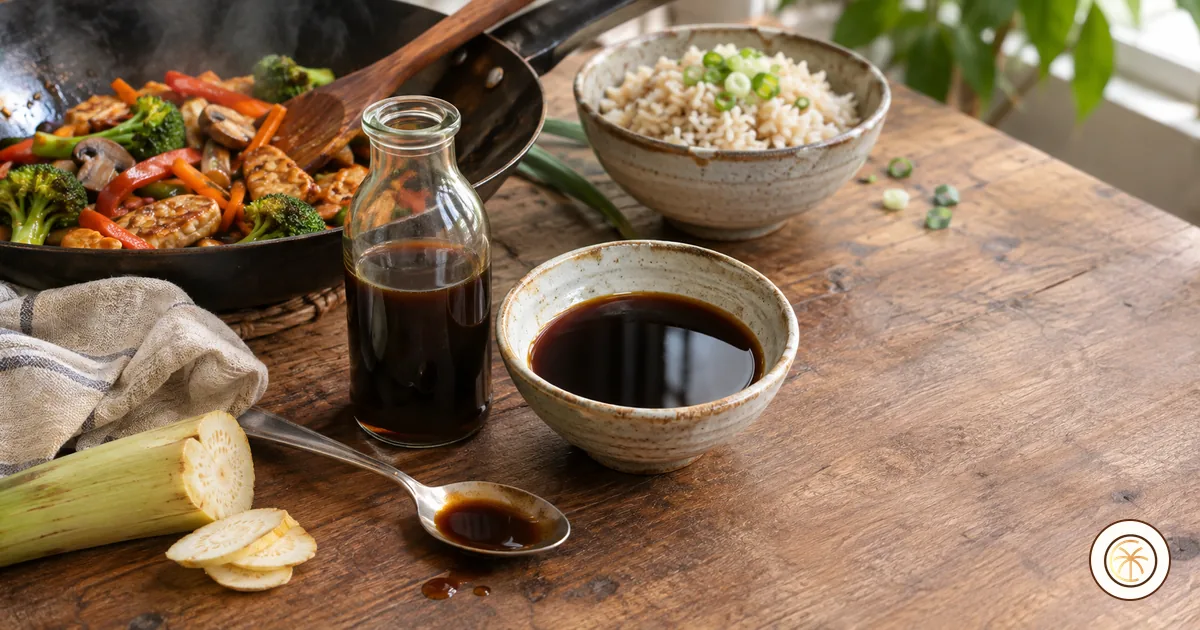
Coconut aminos are a dark, savory seasoning usually made from coconut blossom sap and salt. Despite the name, they do not taste like coconut. The flavor is milder, sweeter, and less salty than conventional soy sauce, so they work in marinades, stir-fries, dressings, dipping sauces, and soups.
They are popular with people avoiding soy or wheat, but labels still matter. Recipes, fermentation methods, sodium levels, and allergen controls vary by manufacturer. Coconut aminos also should not be treated as a protein supplement simply because the product name contains the word “aminos.”
How Coconut Aminos Are Made
Producers collect sap or nectar from coconut palm blossoms, then combine it with salt and concentrate, age, or ferment it according to their process. The result is a pourable brown seasoning with sweet, salty, and mildly tangy notes.
The exact method is not standardized across every brand. Some labels list only coconut blossom nectar and salt, while others include additional ingredients or describe a proprietary fermentation. Buyers should review the ingredient statement, process description, and certificate of analysis rather than assume all bottles are equivalent.
Cocopany's coconut product catalog lists coconut aminos alongside other coconut derivatives, while its product specification details the commercial format and quality parameters.
Coconut Aminos vs Soy Sauce, Tamari, and Liquid Aminos
| Seasoning | Typical base | Flavor | Soy-free? | Gluten-free? | Sodium note |
|---|---|---|---|---|---|
| Coconut aminos | Coconut blossom sap and salt | Mild, sweet, less salty | Usually, verify label | Often, verify certification | Often lower than soy sauce, but not low-sodium by definition |
| Soy sauce | Soybeans, wheat, salt | Salty, fermented, strong umami | No | Usually no | Often high |
| Tamari | Primarily soybeans | Rich, savory, less sweet | No | Many products are gluten-free, verify label | Often similar to soy sauce |
| Liquid aminos | Commonly soy protein | Salty and savory | Usually no | Depends on product | Can still be high |
“Soy-free” and “gluten-free” describe different things. Coconut aminos are commonly formulated without soy or wheat, but people with allergies or celiac disease should look for a clear claim and appropriate certification. Shared facilities and added ingredients can change suitability.
What Do Coconut Aminos Taste Like?
Expect a mild soy-sauce-like seasoning with more sweetness and less intense saltiness. It provides color and savory depth, but it may deliver less fermented umami than soy sauce or tamari. That difference is useful in dressings and glazes, yet it may require adjustments in a recipe designed around soy sauce.
Taste before adding extra sugar. If a dish seems too sweet, balance it with acid, chili, aromatics, or another source of umami rather than automatically adding more salt. If it seems too mild, reduce the sauce slightly or add it in stages.
How to Use Coconut Aminos
Use coconut aminos as a starting 1:1 substitute for soy sauce in flexible recipes, then adjust by taste. A direct swap works better in a marinade or stir-fry than in a standardized commercial formula where salt, water activity, color, and shelf life are tightly controlled.
Stir-fries
Add coconut aminos near the end of cooking so the sauce coats the ingredients without scorching its natural sugars. Combine it with ginger, garlic, chili, and a small amount of toasted sesame oil for aroma.
Marinades
Mix it with oil, acid, and aromatics. Keep raw-meat marinade separate from finished food, or boil it safely before reuse according to food-safety guidance.
Dressings and dipping sauces
Whisk coconut aminos with rice vinegar or lime juice and a neutral oil. Its sweetness can reduce the need for honey or sugar. For dipping sauce, add chili, scallion, or grated ginger.
Soups and grain bowls
Add a small amount, taste, and repeat. The seasoning can deepen broth, lentils, roasted vegetables, rice, and noodle bowls without making coconut the dominant flavor.
Are Coconut Aminos Healthy?
Coconut aminos can be useful for someone who needs a soy-free seasoning or prefers its flavor. That practical role is more defensible than broad claims that it detoxifies the body, prevents disease, or supplies meaningful protein.
Sodium varies significantly by product and serving size. Some brands contain less sodium than standard soy sauce, but coconut aminos are still a salty condiment. The FDA's sodium guidance recommends comparing Nutrition Facts labels and notes a Daily Value of less than 2,300 milligrams for most adults, while individual clinical advice may differ.
The nutrition panel should drive the comparison. Check sodium per tablespoon, added sugars, serving size, and ingredients. “Lower sodium than soy sauce” does not mean sodium-free, and a small serving on the label may understate how much is poured in practice.
A Medical News Today overview of coconut aminos likewise notes that evidence for many proposed health benefits is limited. Use the product as a seasoning, not as medicine.
Does It Contain Amino Acids?
The name refers to amino acids that may be present, but typical servings do not make coconut aminos a high-protein food. Protein values and amino-acid profiles differ by brand and process. If protein intake is the goal, use foods with meaningful protein content rather than relying on a spoonful of seasoning.
Manufacturers making amino-acid, nutrient, gluten-free, or lower-sodium claims must support them with current specifications and applicable testing. Cocopany's guide to reading a certificate of analysis discusses the broader principle of evaluating a specific lot instead of accepting a generic marketing statement.
Storage and Quality
Follow the bottle label. Unopened shelf life and refrigeration instructions depend on processing, acidity, packaging, and preservatives. Use clean utensils, close the cap promptly, and discard a product with unexpected mold, severe package swelling, off-odors, or damage.
Fermented products can vary slightly in flavor and color. Commercial buyers should define acceptable Brix, pH, microbiological limits, sensory range, packaging, and storage conditions before ordering. A specification sheet describes a target; a lot-specific COA reports what was measured for the shipment.
Who Should Be Careful?
- People with coconut allergy should ask a qualified clinician before use.
- People limiting sodium should compare brands and measure portions.
- Anyone with celiac disease or severe wheat allergy should verify gluten-free controls.
- People with diabetes may need to account for sugars and serving size.
- Parents should not assume a condiment is suitable for a child solely because it is soy-free.
Frequently Asked Questions
What are coconut aminos made from?
They are usually made from coconut blossom sap or nectar and salt, then concentrated, aged, or fermented. Ingredients and processes vary, so read the product label.
Do coconut aminos taste like coconut?
No. They generally taste savory, mildly sweet, and less salty than conventional soy sauce, without a strong coconut flavor.
Are coconut aminos soy-free?
Most are formulated without soy, but verify the ingredient list and allergen statement, especially when a severe allergy is involved.
Are coconut aminos gluten-free?
Many are, because they do not use wheat. Certification and cross-contact controls still vary, so people with celiac disease should check the label.
Can coconut aminos replace soy sauce 1:1?
They can be a 1:1 starting point in flexible recipes. Expect a sweeter, less salty result and adjust acidity, salt, and umami after tasting.
Are coconut aminos low in sodium?
They often contain less sodium than standard soy sauce, but values differ and the product is not sodium-free. Compare equal serving sizes on Nutrition Facts panels.
Do coconut aminos need refrigeration?
Follow the manufacturer's label. Some brands recommend refrigeration after opening, while others use different processing and storage instructions.
Final Takeaway
Coconut aminos are a sweet-savory seasoning made primarily from coconut blossom sap and salt. They are useful in soy-free cooking, but sodium, gluten-free status, and formulation must be checked by brand. Food manufacturers and importers can review Cocopany's organic coconut aminos specification for composition, certification, packaging, and commercial terms.