
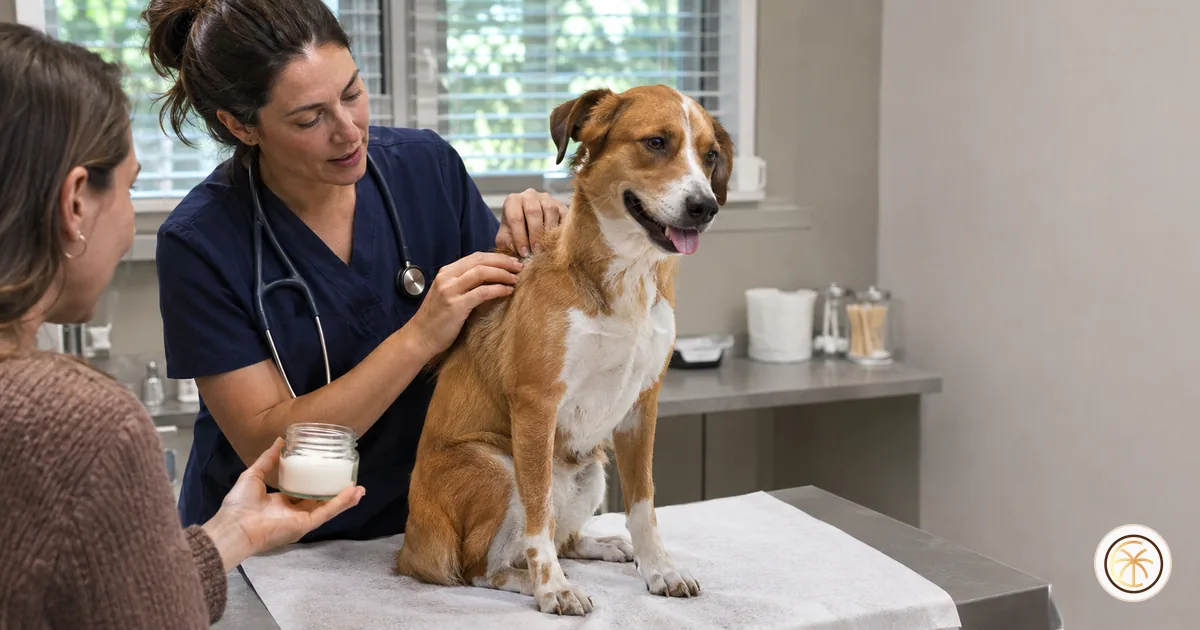
Coconut oil is not toxic to most dogs in a tiny accidental amount, but that does not make it a useful daily supplement. It is calorie-dense, high in saturated fat, and may cause diarrhea, weight gain, allergic reactions, or pancreatitis in susceptible dogs. Routine feeding or skin application should begin only after a veterinarian evaluates the individual dog and the problem an owner is trying to solve.
The evidence for popular claims about coconut oil for dogs is much weaker than social media posts often suggest. Research on specially formulated medium-chain triglyceride diets cannot automatically be applied to spoonfuls of ordinary coconut oil, and a greasy topical layer is not a diagnosis or treatment for an itchy dog.
Is Coconut Oil Safe for Dogs?
A small lick is unlikely to cause a serious problem in many healthy dogs. Larger amounts and repeated use are different questions. Individual risk depends on body size, total diet, weight, digestive tolerance, medical history, and whether the dog has previously had pancreatitis or abnormal blood lipids.
A veterinarian-written PetMD review of coconut oil for dogs does not recommend regular use. It highlights stomach upset, obesity, allergic reactions, and pancreatitis among the concerns and advises owners to consult a veterinarian before adding coconut oil to a dog's routine.
This is why a universal teaspoon-per-pound chart would be misleading. A quantity tolerated by one large, active dog could be excessive for a small dog, an overweight dog, or a dog already eating a therapeutic diet.
What Coconut Oil Contains
Coconut oil is produced from coconut kernel and consists almost entirely of fat. Virgin coconut oil retains a recognizable coconut aroma and is less refined, while RBD coconut oil is refined, bleached, and deodorized for a neutral sensory profile. Cocopany's guide to virgin coconut oil explains the broader production and product differences.
The phrase “medium-chain triglycerides” can create confusion. Coconut oil contains fatty acids of different chain lengths and a large proportion of lauric acid. Commercial MCT oils and veterinary therapeutic diets may use more concentrated, specifically formulated triglycerides. Results from those products should not be treated as proof that ordinary coconut oil produces the same effect.
Potential Benefits and What the Evidence Really Shows
| Proposed use | Evidence in dogs | Important limitation | Practical recommendation |
|---|---|---|---|
| Dry or itchy skin | Mostly anecdotal for plain coconut oil | Grease can be licked off, trap debris, or worsen irritation | Diagnose the cause before applying anything |
| Shinier coat | A surface coating may add temporary gloss | Cosmetic shine does not treat skin disease | Use a veterinarian-approved grooming product if needed |
| Brain health | Some evidence supports formulated MCT-enriched diets | MCT diets are not equivalent to ordinary coconut oil | Discuss therapeutic nutrition with a veterinarian |
| Digestion or constipation | No reliable basis for routine home treatment | Added fat may cause diarrhea or abdominal upset | Treat the cause, not the symptom with oil |
| Weight loss | Not established for spoonfuls of coconut oil | The extra calories may promote weight gain | Use a measured veterinary weight plan |
| Flea or tick control | Coconut-containing products have limited research | Plain oil is not a proven preventive | Continue veterinarian-recommended parasite control |
| Dental health | No credible evidence that it removes tartar or prevents disease | Hardened tartar requires professional care | Brush with dog-safe toothpaste and obtain dental checks |
Skin and coat
Coconut oil can coat the skin and reduce water loss temporarily, which may make a dry patch feel softer. That observation is not enough to establish a treatment. Itching, flakes, redness, odor, and hair loss can result from parasites, allergies, yeast, bacteria, hormonal disease, poor nutrition, or contact irritation.
Applying oil before identifying the cause may make the coat greasy, encourage licking, and delay effective care. Never apply it to an open wound, hot spot, infected area, or surgical site unless the veterinarian treating the dog specifically approves it.
Cognitive function and MCT research
This is the area where marketing language most often outruns the evidence. A randomized clinical study indexed by PubMed evaluated a therapeutic diet containing MCT oil and a nutrient blend in 87 senior dogs with signs of cognitive dysfunction. Some behavioral measures improved over 90 days, particularly in the group receiving the accepted 6.5% MCT diet.
The study tested complete formulated diets, not household coconut oil added by an owner. The diets also contained other nutrients, so the result cannot be reduced to “coconut oil prevents canine dementia.” Dogs with confusion, sleep changes, house-soiling, or altered social behavior need a veterinary examination because pain, sensory loss, organ disease, and neurological disorders can cause similar signs.
Palatability and energy
Many dogs like the taste of fat, so a small amount may make food more appealing. That is not automatically beneficial. Coconut oil provides roughly 120 calories per tablespoon, which can be a large addition for a small dog and may unbalance a carefully measured diet.
Loss of appetite can be a sign of illness. Masking it with a high-fat topper may delay diagnosis and can be especially inappropriate for dogs on low-fat, weight-control, gastrointestinal, or prescription diets.
Risks of Giving Coconut Oil to a Dog
Diarrhea and digestive upset
Adding concentrated fat too quickly can cause loose, greasy stool, vomiting, gas, or abdominal discomfort. A dog that already has a sensitive digestive system may react to a much smaller amount than an online serving suggestion implies.
Stop the product and contact a veterinarian if symptoms are persistent, recurrent, painful, or accompanied by lethargy or loss of appetite. Puppies, elderly dogs, and dogs with chronic disease can become dehydrated more quickly.
Pancreatitis
Pancreatitis is painful inflammation of the pancreas. High-fat foods can be a trigger in some dogs, although the condition often involves several risk factors rather than one ingredient alone. Dogs with a previous episode, obesity, hyperlipidemia, diabetes, or certain breed and medical predispositions require particular caution.
Warning signs include repeated vomiting, reduced appetite, a painful or tense abdomen, a hunched posture, diarrhea, weakness, and lethargy. Suspected pancreatitis needs veterinary assessment, not another home remedy.
Weight gain and dietary imbalance
Treats, toppers, supplements, and table food all count toward daily calories. Adding oil without reducing something else can gradually increase body weight. Obesity affects mobility and is associated with several health problems, so a supplement with unproven benefit should not undermine a balanced diet.
Coconut oil is also not a complete source of the essential nutrients a dog needs. It cannot replace a complete and balanced food or correct a poorly formulated homemade diet.
Allergy and skin irritation
A dog can react to almost any ingredient. Stop oral or topical use if hives, facial swelling, intense itching, redness, bumps, or worsening skin lesions appear. Facial swelling, breathing difficulty, collapse, or rapidly spreading hives require urgent veterinary attention.
Interference with treatment
Natural does not mean neutral. Adding a supplement may complicate a prescription diet, weight-loss plan, elimination diet, or treatment for gastrointestinal or skin disease. Tell the veterinarian about every oil, treat, supplement, and topical product the dog receives.
Dogs That Should Not Receive Coconut Oil Without Veterinary Approval
Do not experiment with coconut oil when a dog has:
- a current or previous episode of pancreatitis;
- obesity or a medically supervised weight-loss plan;
- high triglycerides or another lipid disorder;
- recurrent vomiting, diarrhea, or chronic gastrointestinal disease;
- a prescription or strict elimination diet;
- diabetes, liver disease, or another condition requiring controlled nutrition;
- active skin infection, open wounds, hot spots, or unexplained hair loss;
- a known coconut allergy or a prior reaction to the product.
Puppies also need carefully balanced growth nutrition. Extra oil should not be added casually to a complete puppy diet.
What to Do If Your Dog Ate Too Much Coconut Oil
Remove access to the container and estimate how much is missing. Note the product type, added ingredients, approximate time of ingestion, the dog's weight, and any symptoms. Plain coconut oil is different from a flavored product that may contain chocolate, xylitol, essential oils, or other ingredients that are dangerous to dogs.
Call your veterinarian or an animal poison service for case-specific advice if the amount was large, the dog is small, the product contains other ingredients, or the dog has a relevant medical history. Do not induce vomiting unless a veterinary professional explicitly instructs you to do so.
Seek prompt care for repeated vomiting, a painful or swollen abdomen, marked lethargy, weakness, collapse, breathing difficulty, facial swelling, or inability to keep water down.
If a Veterinarian Approves Coconut Oil
Ask what outcome is being targeted, which product to use, how much is appropriate, how often to give it, and when to stop. The veterinarian may prefer a formulated diet, a measured MCT product, an omega-3 supplement, a medicated shampoo, or another treatment with better evidence for that dog's condition.
For oral use, select a plain food-grade product with no sweeteners, flavorings, essential oils, or added active ingredients. Introduce only the amount specified by the veterinarian and monitor stool, appetite, body weight, skin, and energy level.
For topical use, a veterinarian may advise a small test area first. Prevent excessive licking and stop if redness, itching, odor, moisture, or discomfort worsens. A product made specifically for dogs may be easier to dose and less messy than kitchen oil.
Product Quality Is Separate From Medical Suitability
A high-quality coconut oil can still be inappropriate for a particular dog. Virgin processing, organic certification, clear packaging, or a favorable fatty-acid profile do not prove a health benefit or remove the calories and fat-related risks.
Commercial manufacturers evaluating coconut oil as a pet-product ingredient should review food-grade specifications, microbiological criteria, contaminants, packaging, traceability, and intended use. The VCO and RBD coconut oil comparison explains processing differences, while Cocopany's certificate of analysis guide covers common quality documents.
Frequently Asked Questions
Can dogs eat coconut oil every day?
Daily use is not routinely recommended. Coconut oil adds concentrated fat and calories, while evidence for broad health benefits in dogs remains limited. A veterinarian should first determine whether there is a valid reason to use it, whether the dog's diet can accommodate it, and what monitoring is needed.
How much coconut oil can I give my dog?
There is no universal safe dose for every dog. Size alone is not enough to determine suitability because weight, diet, digestive tolerance, medical history, and pancreatitis risk also matter. Avoid copying an online teaspoon chart. Ask the dog's veterinarian for a product-specific amount if use is justified.
Can coconut oil help a dog's itchy skin?
It may temporarily coat dry skin, but itching has many possible causes and plain coconut oil has limited supporting evidence in dogs. It can also be licked off or worsen irritation. Persistent itching, odor, redness, sores, or hair loss should be examined before applying oil.
Is coconut oil good for a dog's paws or nose?
A dog-safe balm containing coconut oil may sometimes be recommended for a mildly dry surface, but licking and irritation remain concerns. Cracked, bleeding, painful, swollen, or repeatedly dry paws and noses can signal an underlying condition and should be assessed by a veterinarian.
Can coconut oil treat constipation in dogs?
Coconut oil is not a reliable constipation treatment. Giving enough fat to change the stool may instead cause diarrhea, abdominal discomfort, or pancreatitis. Constipation can result from dehydration, pain, obstruction, diet, medication, or disease, so treatment should address the cause.
Does coconut oil kill fleas and ticks?
Plain coconut oil should not replace a proven flea or tick preventive. Even if an ingredient or formulated shampoo shows activity in a limited study, that does not establish reliable protection against infestation or vector-borne disease. Ask a veterinarian which preventive fits the dog's age, weight, health, and location.
Is coconut oil the same as MCT oil for dogs?
No. Coconut oil contains a mixture of fatty acids, while MCT products can be concentrated and formulated differently. Studies of therapeutic MCT-enriched diets do not prove that ordinary coconut oil delivers the same dose, nutrient balance, safety, or clinical effect.
A Practical Recommendation
Do not add coconut oil simply because it is natural or popular. For most healthy dogs eating a complete diet, routine supplementation has no clearly established advantage and adds avoidable fat and calories. If there is a specific skin, digestive, neurological, or nutritional concern, start with a veterinary diagnosis and choose the intervention with the best evidence.
For pet-food and pet-care manufacturers that need documented ingredient specifications, Cocopany supplies organic virgin coconut oil from Indonesia for qualified commercial inquiries. Ingredient sourcing should remain separate from veterinary claims about a finished product.
Sources
- Coconut Oil for Dogs, PetMD, medically reviewed veterinary guidance.
- Efficacy of a Therapeutic Diet on Dogs With Signs of Cognitive Dysfunction Syndrome, Frontiers in Nutrition, indexed by PubMed.