If you’ve been gardening for a while, you’ve probably come across both coco peat and peat moss as popular growing mediums. But when it comes to choosing between the two, many gardeners ask the same question — can I use coco peat instead of peat moss? The short answer is yes, but understanding the differences between them will help you make a smarter decision for your garden. Let’s break it down.
Understanding Peat Moss and What It Does
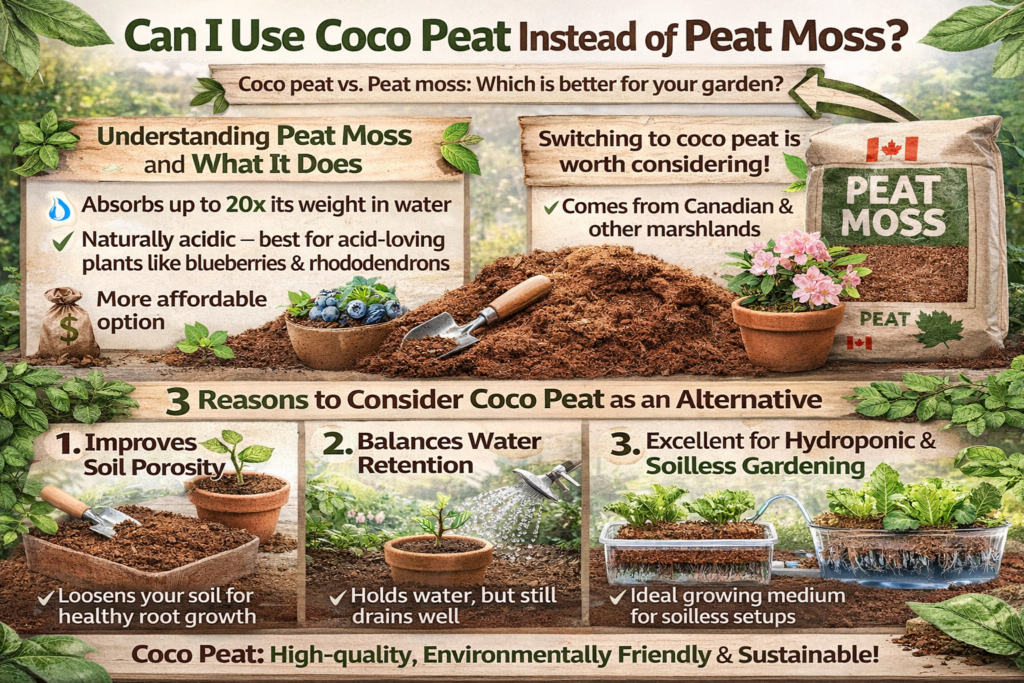
Peat moss comes from sphagnum moss found in Canadian marshlands and other countries around the world. It has been a go-to gardening medium since the mid-1900s, largely because of its impressive water retention capability — it can absorb up to 20 times its own weight in water and release it back to plants slowly over time. This makes peat moss particularly useful for plants that thrive in high-moisture soil conditions. It also helps vital minerals and nutrients stick around in the soil for longer. One more thing worth noting — peat moss is naturally acidic, which makes it ideal for acid-loving plants like blueberries, azaleas, and rhododendrons. In terms of cost, peat moss is generally considered more affordable than coco peat, making it a practical choice for budget-conscious gardeners.
3 Reasons to Consider Coco Peat as an Alternative
So, can you use coco peat instead of peat moss? Absolutely — and here’s why many gardeners are making the switch:
1. Improves Soil Porosity Coco peat increases your potting mix’s porosity, helping the soil stay airy and loose. This allows plant roots to grow more freely, which leads to better overall plant growth and higher yields — something every gardener wants.
2. Balances Water Retention Unlike peat moss which can sometimes retain too much moisture, coco peat strikes a better balance. It increases water holding capacity while maintaining soil porosity, ensuring your plants are protected from both overwatering and underwatering at the same time.
3. Excellent for Hydroponic and Soilless Gardening If you’re running a hydroponic setup, coco peat is an outstanding choice. It has a high cation exchange capacity, meaning it absorbs nutrients from the solution and releases them to plants based on their needs. It is also significantly easier to rewet compared to peat moss, which tends to repel water once it dries out completely.
Which One Should You Choose?
Both mediums have their strengths, and the best choice really depends on your gardening goals. If you need a cost-effective, high-moisture medium for acid-loving plants, peat moss is a solid option. But if you’re looking for something more sustainable, versatile, and easier to manage — especially for hydroponics or soilless growing — coco peat is the clear winner. As an organic medium that is a byproduct of coconut processing, coco peat is also a more environmentally friendly alternative to peat moss, which takes thousands of years to form naturally.
The Bottom Line
Can you use coco peat instead of peat moss? Yes — and in many cases, it’s actually the better choice. Whether you’re growing vegetables, herbs, or running a full hydroponic setup, coco peat offers the porosity, water balance, and nutrient retention your plants need to thrive. Browse our premium quality coco peat products today and find the right growing medium for your garden. Feel free to contact our customer service if you need any guidance — we’re always happy to help.