Everyone is familiar with coconut. But did you know that the use of coconut goes beyond culinary uses? From medical, cosmetic, construction, fuel, to horticulture. Yes, even horticulture. And in this post, we will tell you 3 important things to know about coconut fiber substrate.
What Is Coco Fiber Substrate?
When talking about the use of coconut in horticulture, it almost always means coconut coir. What is coconut coir? It is the fibrous part located in between the outer coating of the coconut seed and the shell.
Until the 19th century, coconut coir is seen as a waste product. Today, people realize how useful coconut coir is. It has a wide range of applications, including in horticulture.
How Is Coco Fiber Substrate Made?
Before it is ready to be used for agricultural purposes, coconut fiber substrate must first undergo extensive processing. The processing goes more or less like this:
- The coir is removed from the coconut. The removal process involves soaking the coconut husk in water. This loosens and softens the coir. This process is done either in freshwater or tidal waters.
- After the water bath, the coir is dried for over a year.
- Once the drying process is finished, the coir is then organized into bales.
- The bales are processed into various formats and then packed.
(Note: If the water bath is done in tidal waters, the coir will have high salt content, which will be flushed out later on.)
Types of Coconut Fiber Substrate
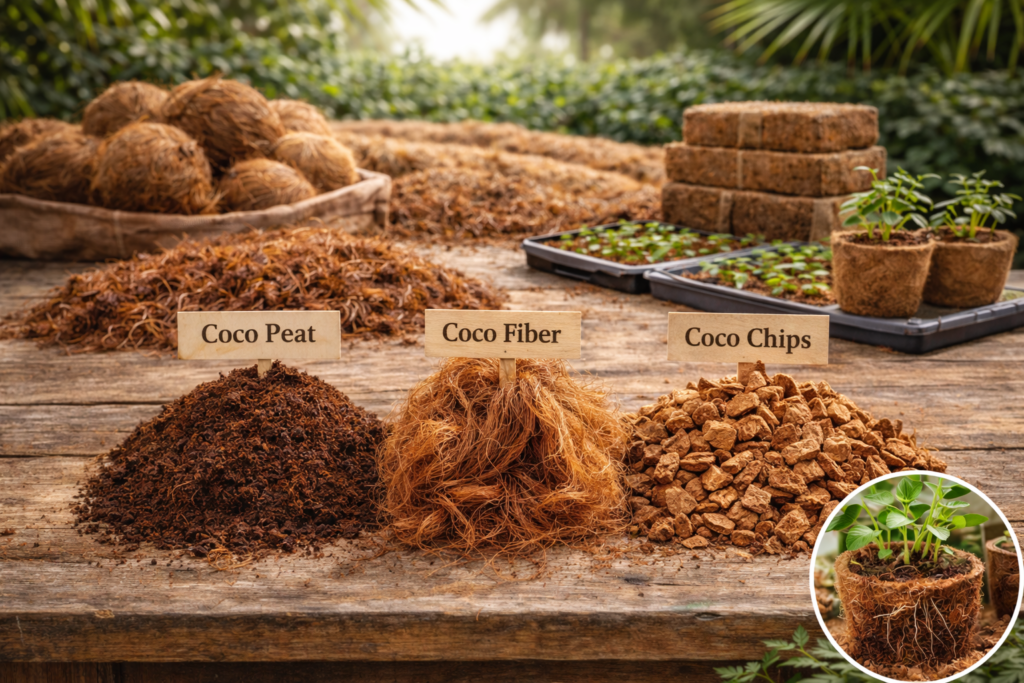
Coco fiber substrate is made from coconut coir. There are three types of the substrate: peat, fibers, and chips.
- Coco peat
Coco peat or pith is a type of coco coir that looks just like peat moss. It is the most common type of coco coir.
The peat is very small and absorbent. Because of this, using it as a standalone growing medium is not recommended. If you do so, you might drown your plants’ roots.
To be used as a growing medium, coco peat needs to be aged properly first. If not aged properly, it may let out its salt content. This will kill the plant growing on it.
So, to ensure your plants are thriving, buy coconut fiber substrate that has been aged properly.
- Coco fibers
Coco fiber is, well, the fibrous part of the coir. The fiber can add air pockets into a growing medium. Every growing medium requires air pockets so it can provide oxygen to the root area. If your growing medium is lacking air pockets, coco fiber can help add some.
Keep in mind that the fiber is not very absorbent compared to the peat. Plus, it breaks down fast. That means the air pockets the fibers add will decrease as time goes by.
- Coco chips
Coco chips are similar to expanded clay pellets. The difference is that, instead of being made of clay, it is made from plant matter.
Coco chips are considered as the hybrid between the peat and the fiber. They have the best things the other two types have to offer.
On one hand, coco chips are absorbent, which means they won’t let the plants dehydrate completely. On the other, the chips are large enough they can add air pockets.
As you can see, each type of coir has specific benefits. When used together, they become an excellent growing medium.
Do keep in mind that when using coco coir for horticultural purposes, you need to use the right mix of peat, fibers, and chips to get the best result.
Should you use coco fiber substrate? That is up to you to decide. Still, coconut fiber substrate is an amazing choice whether you use it as a standalone growing substrate or to amend soil. Want to give it a try? Buy coco fiber substrate here.